Blog

News & Resources

Latest Posts

From the VEI Team

Industry news, product updates, and technical guides from our team.

Two-Way Radio Service

We Offer Dispatch Radio System Design & Installations

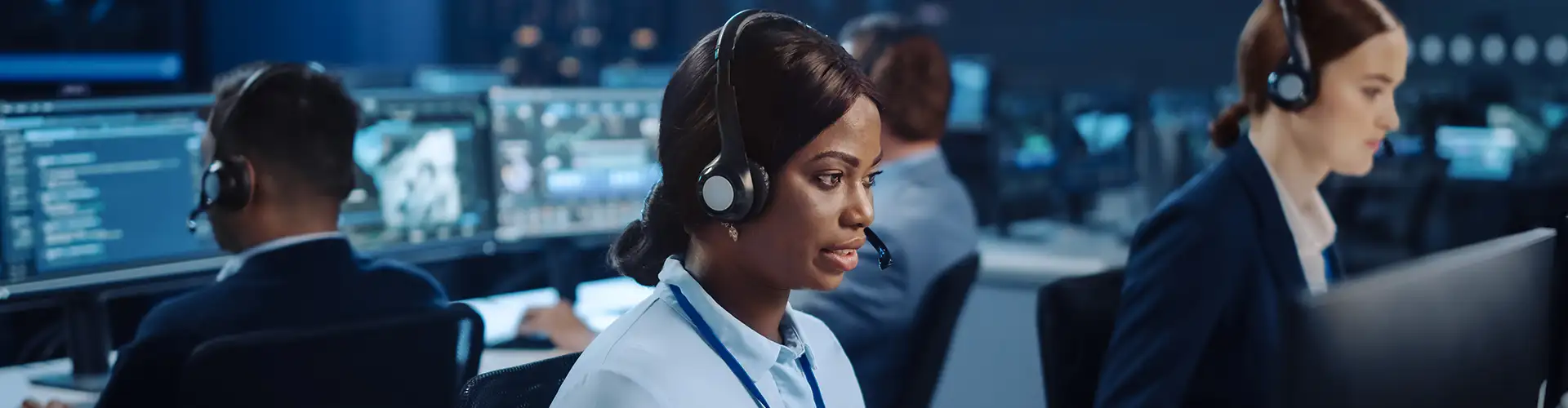
Why Dispatch Radio Is Critical

Dispatch radio systems are critical for some of our most important industries, including emergency services, local response teams, and state government use. These systems must be in proper working order, 24 hours a day, 7 days a week, 365 days a year. This is when clear communication really can be a matter of life and death.

In the world of emergency services, the operation of the incident command center is where the success of your team begins. VEI Communications has extensive experience in the business of dispatch radio systems throughout Southern Indiana, Southern Illinois, Western Kentucky, the Louisville metro area, and South Carolina. We provide the tools, resources, and expertise to bring emergency communications for emergency situations to your operations.

Benefits of Using Dispatch Radio

Dispatch radio systems for mission-critical communication jobs give users the ability to share tasks and manage multiple locations all on one screen. Dispatch radio systems allow for your business to stay safe, productive, secure, and reliable when it counts.

  • *Safety:* The number one priority with any dispatch system is to maintain and follow safety regulations for everyone involved.
  • *Productivity:* When there’s multiple things happening at once or lots of moving parts to oversee, dispatch allows any industry to function more productively by giving more clear direction than before.
  • *Security:* With a professionally designed and installed dispatch radio system, you have the peace of mind that your dispatchers have the best tools available to respond quickly and effectively.
  • *Reliability:* Dispatch communication is always more reliable than cell phones or other communication methods.

Whether your organization is large or small, with basic or complex needs, our dispatch communications solutions provide reliable connectivity, intuitive operation, and robust functionality for your team.

SEE OUR DISPATCH RADIO SYSTEMS

Two-Way Radio Rentals

Your Trusted Source for Short-Term Communications Solutions

When You Need Radios on Short Notice

No matter the reason, two-way radio rental can be a viable option when you need a way to manage and communicate with multiple people throughout your company staff. Finding a reliable way to communicate clearly and effectively keeps everyone on task, on schedule, and on budget. Organized teams who have a premeditated means of communicating can respond to security issues, medical emergencies, or scheduling delays quicker, all while keeping guests, attendees, and staff safe and engaged.

When your business or team needs an easy and reliable way to stay connected during the busiest events of the year, consider two-way radio rental with VEI Communications.

Rent Two-Way Radios for Your Next Event

Whether you’re looking to cover operations in single facility, a sprawling outdoor venue, or a large industrial turnaround site, VEI Communications offers two way radio rental throughout Louisville, KY and surrounding areas. Many of our customers rely on walkie talkies, and portable radio rental for private events, special circumstances, and events such as:

  • *Trade shows and industry association meetings:* Keep everyone informed and on schedule, during set up and throughout the day’s events to keep your guests happy and keep the event running smooth.
  • *Conferences, conventions, and corporate events:* Clear communication is the key to pulling off a comprehensive event, like a Louisville business conference, convention or company party. Two way radios allow you to stay in touch anytime, anywhere without worrying about cell phone coverage failure or down signal towers.
  • *Fairs and festivals:* When you’ve got large crowds coming in and out of your city, safety concerns stay on high alert. Stay in touch with event staff through reliable communication via two way radio rental, to keep attendees and staff safe and happy throughout the duration of the festival.
  • *Sporting events:* Louisville, KY’s most beloved sporting event, the Kentucky Derby, depends on the help of VEI Communications. Our two way radio rental helps keep event staff  on top of their game to help things run smoothly and safely.
  • *Concerts:* Ever tried using a cell phone in a concert hall? Nearly impossible, right? Never worry about not getting through to someone and turn to two way radio rental instead. Keep your staff ready, your venue secure and your guests happy, no matter how loud the music is.
  • *School, church, and community activities:* When you’re accommodating hundreds of parents, children, and families, you need to be at the top of your game. Clear communication with your team via two way radios allows you to manage events with ease.
  • *Facility management and construction changes:* When your warehouse or industrial building is undergoing changes, stay in touch with your work crew through radio communication. Your workers can carry their portable radios throughout the facility, ready to be reached at any moment.

GET A RENTAL QUOTE

Telex Dispatch
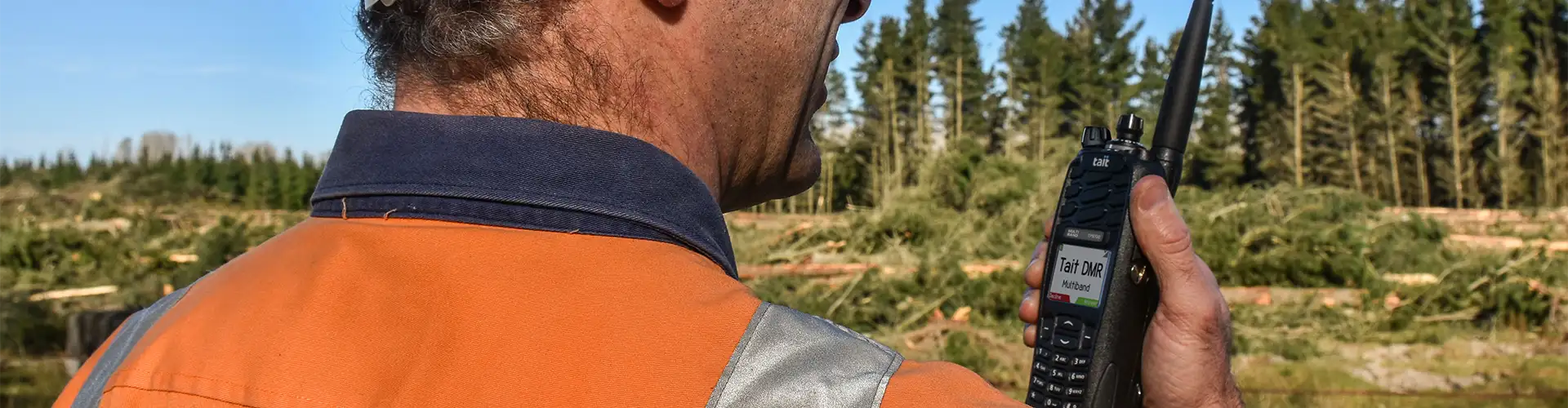
Tait DMR Radios
10 Ways To Protect And Strengthen Your LMR System

10 Ways To Protect And Strengthen Your LMR System

How do we qualify tougher LMR systems?

Ten essential attributes every radio system operator needs to understand, to boost the integrity of their new, or existing, LMR system.

By the ability to maintain critical communications in the face of technical, physical, security or human challenges and threats.

This guide investigates every aspect of wireless communications, and considers how operators might make their LMR systems more resilient.

Why a Tougher System Matters

This is important because tougher, more robust communication supports your stakeholder expectations, protects your communities, reduces risk of costly communications outage and allows more efficient use of increasingly-constrained resources. And it gives your workers the confidence to perform their duties more effectively, knowing that support is at hand whenever they need it.

The advice and recommendations given here are not confined to a particular industry, a specific technology or manufacturer. Rather, this is a series of expert guidelines and ideas that LMR system operators might consider, weighing them up against the perceived risks they face, and the cost to implement.

Developing a deeper understanding of the technical challenges and the possibilities to improve creates more informed conversations with your consultant, vendor or local provider.

When upgrading to a new LMR platform, many decisions impacting on the toughness of your new system will be made at the design stage. However, there are still numerous cost-effective operational decisions that can positively influence your existing communications system.

DOWNLOAD THE GUIDE

Compare Phase 1 and Phase 2 P25

What is the difference between P25 Phase 1 and Phase 2?

Our series of Tait Radio Academy lessons on P25 continues, this time looking at the difference between P25 Phase 1 and Phase2. This course is taught by Andrew McTaggart, a Customer Support Engineering Specialist at Tait Communications. Prior to that, he was a product trainer on P25 digital radio communications equipment.

P25 Phase 1 vs. Phase 2

One of the original goals of P25 was spectrum efficiency. The radio spectrum is a limited resource. There are only so many radio channels that can be licensed in a given area.

Analog FM channels used to be 25 kilohertz wide. As the spectrum became more congested, narrowband channels were introduced. With the old 25kHz channels halved to 12.5kHz, the number of available channels effectively doubled if all users migrated away from wide band. P25 Phase 1 was designed to use the same bandwidth as a narrow band FM channel, meaning they could be used side by side, and narrow band FM channels could gradually be replaced by P25 digital channels.

How Phase 2 Improves on Phase 1

Phase 2 is more spectrally efficient than Phase 1, providing two effective channels per 12.5 kilohertz bandwidth. In P25 Phase 2, each physical base station provides two effective voice channels. It does this by using TDMA, or Time Division Multiple Access, where two independent conversations share the same channel.

Another benefit of P25 Phase 2 is longer battery life. Because of the TDMA, the transmitter is only working half the time during a transmission, therefore increasing the battery life of the portable.

Phase 2 is backwards compatible with Phase 1 radios, allowing a new Phase 2 radio to operate with users of Phase 1 P25 equipment, and to operate on Phase 1 network equipment.

It’s important to realize that Phase 2 is currently only available for trunked P25 operation. For radio to radio and conventional P25 operation, Phase 1 is still used.

CONTACT VEI COMM TO LEARN MORE

omnitronics dispatch
Tait P25 Two-Way Radios
Kenwood Promotions

New Kenwood Promotion

Select NX Models End User Rebate

04/01/2024 – 09/30/2024

This offer runs from 04/01/2024 until 09/30/2024. Mail all required documentation to the address listed on the mail-in form or upload required documentation directly to this website. Submissions must be postmarked or uploaded by 11/14/2024 and within 30 days of purchase. Limit (250) rebate(s) per person. Reproduction, purchase, sale or trade of proof-of-purchase or cash register receipt is prohibited. Fraudulent submissions could result in federal prosecution under the mail fraud statute (Title 18, United States Code, Sections 1341 and 1342).

The following products qualify for this offer:

Product Rebate Value NX-1200AV $30.00 NX-1200DV $30.00 NX-1200NV $30.00 NX-1202AV $20.00 NX-1300AU $30.00 NX-1300DU $30.00 NX-1300NU $30.00 NX-1302AU $20.00 NX-1700HAV $30.00 NX-1700HDV $30.00 NX-1700HNV $30.00 NX-1800HAU $30.00 NX-1800HDU $30.00 NX-1800HNU $30.00 NX-3200 $50.00 NX-3220 $50.00 NX-3300 $50.00 NX-3320 $50.00 NX-3400 $50.00 NX-3420 $50.00 NX-3720 $50.00 NX-3820 $50.00 NX-3920 $50.00 NX-3921 $50.00

The following items must be submitted to qualify for this offer:

a copy of the sales receipt or online invoice showing the eligible product(s) purchased. the serial number(s) from the product(s) purchased with your submission. There are 2 options for submitting your rebate claims. You can either register for this offer and mail in your supporting documentation OR use the Paperless Submit feature by clicking the appropriate button below.

[](https://kenwood.rebateaccess.com/)

Analog Vs Digital Radios

Analog vs Digital Radios: Which One Is Best?

Analog radios are one of the few things that still work (relatively) the same as they did 100 years ago. Since the days of Morse code, analog radios have continued to be widely used.

Why?

Because they work, and they work well.

Still, technology is constantly changing and improving. Digital radio systems are expanding the abilities of two-way radios and paving a new path that may drastically change the future of two-way radios. Before delving into the analog vs digital radio discussion, let’s first understand the basics of both.

What is an Analog Radio?

Analog radios have been used to communicate since the 1930s to carry messages for the military and business professionals.

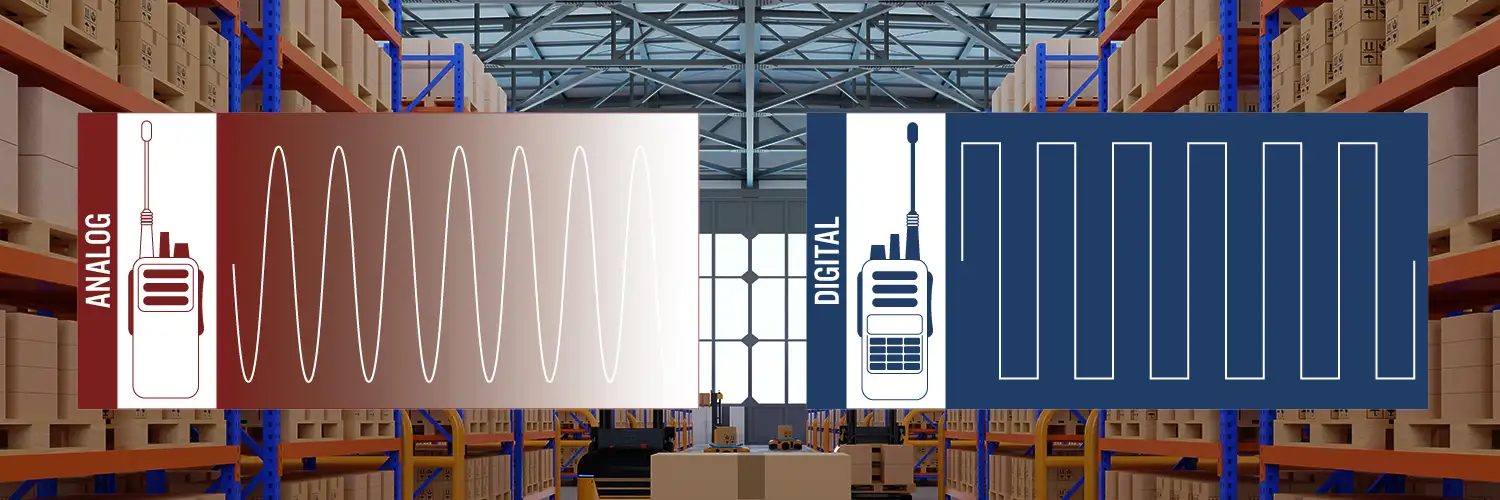
Analog radios use either VHF or UHF carrier waves to carry a message. The carrier wave connects to a receiving radio that demodulates the frequency to play the voice message.

By definition, an analog radio creates an “analogy” of the voice across radio waves.

What is a Digital Radio?

Digital radios change the game entirely.

Rather than using waves, the information is translated into a binary format.

This creates a more exact and continuous segment rather than relying on the quality of radio waves.

With digital technology, the sound is either crystal clear or nonexistent. You don’t get the fading, cutting in and out, or breaking up like you would with an analog radio. It either is within range and works perfectly or will immediately drop off once it’s out of transmission range.

Comparing the Pros and Cons of Analog and Digital Radios

On the surface, the analog vs digital radio debate appears to favor digital radios, but it isn’t that simple. Before drawing any conclusions, let’s weigh the pros and cons of both systems.

Pros and Cons of Analog Radios

Older doesn’t necessarily mean outdated.

Today’s analog radios are a reliable option in today’s market with many advantages to commercial users.

Pros

  • Cheaper: When comparing the cost of analog vs digital radios, analog radios are usually less expensive, which is perhaps their biggest advantage and makes them more appealing. Although some experts claim that this price differential will be null in a few years when digital products become more affordable.
  • Inter-Operable: Because they have been around forever, there are several accessories and add-ons available to analog radios. Even new analog radios work with older equipment and accessories.
  • Easy to Use: They are a popular choice for first-time users because of their simplicity and user-friendly interface.
  • Coverage: In areas where users may be moving in and out of coverage, (search and rescue, wilderness, or outdoor pursuits) analog radios work better. They can provide more coverage options, even if the signal is weak.

Cons

  • No Group Chats: Most analog radios are only capable of one two-way conversation at a time, meaning you can only have a conversation with one person at a time.
  • Older Technology: While devices can be upgraded, the technology cannot. Some device aspects of analog radio can be upgraded; at the end of the day, analog radios still operate using the same simple technology.

Pros and Cons of Digital Radios

Professional radio communications made a big leap with digital radio options. The regulations and real-world needs have driven the innovation in two-way radio technology.

Pros

  • Group Chat: Digital radios are capable of more than one conversation on the same channel allowing multiple people to participate in the conversation.
  • Noise Canceling Technology: Background noise can be reduced to make communication on digital radios more clear.
  • Evolving Features and Upgrades: New software upgrades are consistently offering increased performance and new features.
  • Better Battery Life: Digital radios typically have 30-50 percent more battery life than analog radios.

Cons

  • Interface Learning Curve: Digital products are more advanced than analog radios, and so they aren’t as user-friendly for first-time users. It may take more time to learn and get used to it, similar to getting a new cell phone and learning all the new features.
  • More expensive: Digital radios are typically more expensive than analog options because the technology is more advanced and they have more expansive features.
  • Dropped Signal: Because digital radios aim to cut out background noise, the signal may drop if there is too much frequency noise.

FAQs

Can an analog radio receive a digital signal? No. An analog radio cannot transmit or receive a digital signal.

Can a digital radio receive analog signals? Yes, all digital radios can also receive analog signals on designated channels. This allows companies to upgrade to a digital system slowly over time and spread out the costs while still using their current older equipment.

I don’t want to change my radio. What are my options? If you’re not ready to change your receiver, the best thing to do would be to buy a digital radio and simply program it in analog mode. This allows you to use your current equipment until you’re ready to fully switch to digital.

Are You Ready to Switch?

For the vast majority of users, the swap to digital radios is eventually inevitable. Day-to-day operations are improved, features are increased, and equipment options are advanced.

When you compare analog vs digital radios, the latter has a distinct advantage because of its sound clarity, better battery life, and secure encrypted communication. Whether you work in a school or on a seaport, the reliability, durability, and convenience of two-way radios are essential and that means digital radios.

Some legislators are pushing to mandate that all new designs of two-way radios must have digital capability. This means that practically everyone in the future will use digital.

Event Radio Rentals for Concerts

Event Radio Rentals for Concerts

The use of two-way radios at crowded special events like concerts is important in ensuring that your team can communicate. Instead of worrying about digital radio purchases, think about renting event radios. They’re cheaper and hassle-free, and renting with VEI means 24-hour technical support.

3 Benefits of Renting a Radio for a Concert

Buying radios you don’t like and finding a place to store them after every event can be a stressful chore. Here are 3 benefits of radio rental instead of buying them.

1. Ability to Test the Product – Radio rental services allows you to use the equipment without committing to a purchase. Use this opportunity to test the equipment and ensure you like it before purchasing.

2. Renting is Cheaper –The cost of renting radios for shows is significantly cheaper than purchasing outright. Renting radios once reduces the stress of making a long-term purchase during one-time events. Renting is a cheap alternative without the responsibility of storing the radios after the event or wasting money for only one use.

3. Better Performance in Loud Areas – It might be difficult to hear above the crowd or obtain a signal on your phone at loud events such as concerts. Field radios are a dependable solution to ensure service and sound quality for all of your communication needs.

Why Rent With Us?

Here are a few reasons why you should choose the professionals at VEI for all of your event radio rentals in Southern Indiana, Western Kentucky, and South Carolina.

Radio Delivery – We will deliver radios to the shows you are renting them for complete with a full line of communication accessories, such as spare batteries and speaker mics.  This saves you time and allows you to focus on the other aspects of your event.

Reliable Communication – If an emergency occurs during the show, two-way radios are able to provide instant communication to help find a solution. Without them, you may have problems calling with poor service and hoping that someone answers. Searching through the event to try and find the person is not always an option, so it is best to have reliable communication.

Quality Product – When renting radios services, you have the option to return them if you do not like the equipment. We prioritize using the best radios on the market, so you can anticipate high-quality sound and coverage on any site at any time.

Custom Maintenance Agreements – Our agreements are designed to keep you in control of your equipment.

Technical Support – Renting from VEI means reliable service 24 hours a day to suit all of your needs.

FAQs About Event Radio Rentals

Which Radios Should I Rent?

It depends on a variety of factors. If you are renting for an event that does not require much range, you can rent a smaller and less powerful radio and still have your needs met. If you are in need of a longer range and more power, consider renting a powerful radio with a higher wattage. If you are still unsure, our team of experts can help you find the perfect radio to rent for your event!

Do I need a FCC license to use rented radios at my event?

In short, yes. The FCC requires that all business frequencies be used with a FCC license. Most radio rental companies have FCC-licensed frequencies already built into their radios.

Top 5 Two-Way Radios

Today’s Top 5 Best Walkie Talkies

Whether you’re a first-time user wanting something simple, or an experienced walkie-talkie veteran, this guide will help you pick out the best walkie-talkie for your needs.

We ranked five of our favorite walkie-talkie models based on features, capabilities, and overall functionality.

Kenwood NX-5200/NX-5300/NX-5400

Brand: Kenwood

Optional Features/Upgrades:

  • Available with or without a numeric keypad
  • Optional encryption module upgrade

Key Features:

  • Built-in Bluetooth
  • GPS
  • SD card slot
  • Encryption equipped

Kenwood’s NX-5000 series is a great option for those who have not made the switch from analog to digital radios and want to ease in.

This series of walkie-talkies is capable of three different digital CAIs, (Common Air Interfaces) while also being FM analog capable. This makes it an ideal option for those who are unsure which type of digital walkie-talkie they want, are unsure if they want to switch from analog to digital, or just want to stay in analog with the option to ease in down the road. Therefore, it is the best walkie-talkie for people who are still not sure how they would use it.

Product Benefits:

  • Built-In Bluetooth – This feature is ideal for those who want the communication abilities of walkie talkies while operating hands free. This series is able to pair to a bluetooth headset to allow the user to remain hands-free.
  • SD Card Slot – This feature allows the user to expand the memory capacity of their walkie-talkie up to 32 GB for storing data on a microSD card.
  • Encryption Equipped – the NX-5000 series of radios come equipped with 56-bit key data encryption standard in order to provide a secure method of communication between the users. In addition, users can purchase an upgraded module for up to 256 bit advanced encryption standard.
  • Built Tough – the NX-5000 series of walkie-talkies go through a series of tests before they are put onto the market to test their strength and durability under pressure. These walkie-talkies are made to withstand water for up to two hours one meter deep.

Kenwood NX-3300

Brand: Kenwood

Optional Features/Upgrades:

  • Full keypad model with LCD
  • Standard keypad model with LCD and large 4-way D-pad
  • Basic model without LCD or keypad

Key Features:

  • Built-in Bluetooth
  • Built-in GPS receiver
  • Active noise reduction

Kenwood’s NX-3300 is a versatile two-way radio that allows the user to use it as both an analog and digital radio.

This is considered the best walkie-talkie for users who are familiar with analog radios, but not yet familiar with digital. With a variety of screen and keypad options, the NX-3300 is sure to have a model for every user.

Product Benefits:

  • Built-In Bluetooth – Ideal for those who want the communication abilities of walkie-talkies while operating hands-free, this series is able to pair to a Bluetooth headset to allow the user to move around more freely.
  • Built-In GPS – This feature is great for commercial applications, as the entire fleet of radios can be tracked.
  • Active Noise Reduction – Take the renowned sound quality of Kenwood products and combine it with active noise reduction to allow you to hear only what you need to hear, not the background noise.

Kenwood NX-1300

Brand: Kenwood

Optional Features/Upgrades: Variations with and without LCD backlit keypad

Key Features: 

  • TDMA and FDMA capable
  • Remote stun/kill feature
  • 5-watt coverage on both UHF and VHF

Kenwood’s NX-1300 is a great option for all two-way radio users.

It is one of the best business radios, coming at a reasonable price point, and is known for its easy-to-use system and superb audio quality.

Product Benefits:

  • TDMA and FDMA Capable – This feature makes the device capable of matching the frequencies of other radio fleets, even if they are different brands.
  • Remote Stun/Kill – The NX-1300 is capable of going into stun or kill mode. When the user puts the radio into stun mode, it is unable to receive or transmit messages over any channels. When the user puts the radio into kill mode, all features will be unavailable. These are useful features that can be used remotely if your radio is lost or stolen.
  • VHF and UHF Capable – This feature makes the walkie-talkie capable of being used in just about any situation. If you are in a crowded city with a lot of buildings, you can use the radio in UHF. If you are in a remote area free of obstructions, use VHF.

Don’t Be Caught Unprepared

Walkie-talkies are essential tools that can be used for a variety of options from GPS to communicating across various signals and frequencies.

Rechargeable and portable, a walkie-talkie should be in any person’s toolkit, as you never know when the need may arise. That’s where VEI comes in. We are your one-stop shop for two-way radios in Louisville,KY.

Choosing the best walkie-talkie for your needs will definitely come in handy.

This list of today’s top 5 walkie-talkies will assist you in making the decision that is right for you.

11 FAQs About Two-Way Radios

11 FAQs About Two-Way Radios

Whether you are looking to purchase or rent two-way radios for your business or personal use, it is important to know the basics. Whether you are experienced with two-way radios or a beginner, you likely have some questions you want answered. Some of these questions include:

1. Should I Use VHF or UHF?

When deciding on VHF or UHF, it depends on several factors.

If you are indoors or somewhere with a lot of obstructions, use UHF.

These would be places like school buildings, hotels, hospitals, construction sites, retail, warehouses, or a college campus. These areas have lots of buildings, walls, and other obstructions where UHF is better equipped to handle.

If you are in areas free of obstruction, you should use VHF. These would be road construction, farming, agriculture, ranch work, etc.

2. What Are the Benefits of Two Way Radios Over Cell Phones?

Many people wonder why they need a two-way radio when they have a cell phone.

While both contain the ability to communicate, that’s about the end of their similarities.

  • Radios cost much less and do not have monthly service fees, roaming charges, contracts, or data plans.
  • Radios are built to communicate, that’s it. When clear communication is the goal you don’t want the additional distraction of scrolling, surfing, or searching.
  • Radios are always preferred in an emergency because of the instant Push-to-Talk capabilities. No need to unlock the phone, search for the contact, dial the number, wait while it rings, and hope they answer.
  • A radio will have a battery life of at least twice as long as your cell phone battery, some can even last up to 24 hours.

3. What is Wattage and Why Does It Matter?

Wattage refers to the amount of power a handheld radio can put out. Most business radios run between 1 to 5 watts.

Higher wattage means a larger range of communication.

For example, a radio running at 1 watt should translate to around a mile of coverage, 2 watts may reach up to a 1.5-mile radius and a 5-watt radio may be able to reach up to 6 miles away.

4. Do I Need a License for My Two-Way Radio?

If you are using a two-way radio to communicate more than 1 mile apart, chances are you need an FCC license.

If you’re within a 1-mile range (and are not communicating for business), you may not need a license.

An example of this might be a family hiking or camping trip, those radios are for personal use and do not require a license. Anytime you use a radio for business or extend your range, you’ll want to check into an FCC license.

5. Where Do I Get an FCC License?

To apply for a new license, you can follow these simple steps:

  • Log in to ULS Online Filing with your FCC Registration Number (FRN) and password. (If you don’t have an FCC number, you’ll need to apply for one)
  • On the left side of the screen, click Apply for a New License
  • From the drop-down box, select the Radio Service for the new license
  • Click Continue to navigate through the application
  • Sign your application and click Submit Application

6. How Long Will My Two Way Radio Battery Last?

Typically, two-way radios have a battery life expectancy of 10-12 hours for single use and a lifespan of 18 to 24 months.

This of course depends on the quality of the battery, and how the radio is used. There are ways to maintain your radio battery to increase its lifespan, those steps can be found here.

7. What is the Difference Between Two Way Radios and Walkie Talkies?

Two-way radios and walkie-talkies are often used interchangeably, but they actually aren’t always the same.

All walkie-talkies are two-way radios – they are handheld devices that receive and transmit messages.

However, some two-way radios aren’t handheld.

For example, a desk-mounted radio is a two-way radio that receives and transmits messages but isn’t classified as a walkie-talkie.

So, if you can walk and communicate at the same time, you’re using a walkie-talkie. If you’re sitting at a desk and can’t take the radio with you, you’re using a two-way radio.

8. What are PL and DPL Tones?

These are sub-frequencies that filter our other radios user’s transmission to create a clear frequency in the same area.

PL Tone stands for Private Line Tone, DPL is Digital Private Line.

Even when using these sub-frequencies, you can and should still “monitor” the frequency first before transmitting the channel.

9. What is Two-Way Radio Encryption?

Encryption is a method of scrambling the voice signal so that only radios with the encryption code can hear each other.

This prevents other people from listening in on your conversations and is important in sensitive industries like law enforcement, first responders, and hospital use.

10. How Far Will Two-Way Radios Work?

Companies, in general, will always overstate their radio range.

Anyone claiming to have a radio that works 30 miles away is likely speaking more theoretically than realistically.

We don’t live in an empty and flat world, and every obstacle around you will affect the range of your two-way radio. Terrain, signal type, population, obstruction, and wattage can all affect the range.

For a general estimate, two people around 6 feet tall using a 5-watt handheld two-way radio, used on flat ground with no obstacles, can expect a maximum range of approximately 6 miles.

You can increase this with a better antenna, or this distance may only reach 4 miles with any number of outside factors.

11. Should I Rent Two Way Radios for My Event?

Absolutely.

Renting radios is a great way to receive the benefits of communication at your event without an investment.

If you are planning for the county fair, a local concert, sporting event, conference, trade show, school or church activities, construction changes, etc., two-way radios are always a great idea.

Got more questions? We are here to help. We are your one-stop shop for two-way radios in Louisville, KY.

At VEI Communications, we help keep your team connected with a wide variety of radio options, rental equipment, and customized systems to help your team when it matters most.

The South Carolina Palmetto 800 Radio System

The South Carolina Palmetto 800 Radio System

Wide-Area Two-Way Radio Coverage in South Carolina

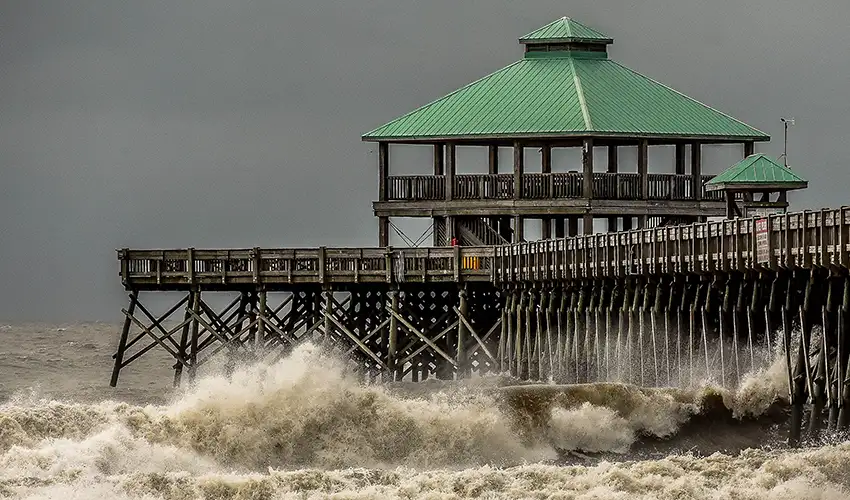
In 1989, hurricane Hugo pummeled the East Coast with 135 mph winds and a 5-to-10 foot tidal surge.

The storm cut through the center of South Carolina and devastated the state causing $7 billion in damage, 27 deaths, and leaving 60,000 people homeless.

In the midst of the most severe storm in South Carolina’s history, communication problems only made things worse.

Communication centers were destroyed, state offices were flooded, and 1989′s radios didn’t allow state troopers to talk to state agents or provide clear communication between state and local police.

The chaos from lack of communication caused evacuation order delays, slower emergency response times, and delayed restoration efforts compounding problems in an already-devastated community.

After Hugo, emergency managers, police and fire departments, utilities, and the government took a hard look at their radio systems. They found conflicts and incompatibility all over the state.

The ability to communicate and collaborate between agencies became an immediate priority.

In 1990, then-governor Carroll Campbell established Partners in Preparedness, which was an advisory board to lead the state’s quest for interoperable communications.

And thus, the Palmetto 800 radio communication service was born.

What is Palmetto 800?

Partners in Preparedness included members from Motorola, Bell South, Scana, and other technology companies to focus on developing a multi-agency interoperability system throughout the state.

The goal was to develop a comprehensive network support solution that would ensure the highest levels of communication for emergency and public safety users.

They wanted to create a state-wide system that would include 24/7 monitoring, local technician dispatch, technical help desk support, and repair and restoration with multi-level response procedures.

In 1992, the original system was born with Scana Communications at the helm.

In 2001, Motorola took over management, responsibility, and ownership of the network to complete governor Campbell’s vision to serve and protect people and property throughout South Carolina.

Today, this state-wide emergency network is known as Palmetto 800. It is named for the 800 megahertz radio frequency it uses and adopted the nickname of South Carolina “The Palmetto State.”

Palmetto 800 allows a state agency to communicate instantly with local fire departments, emergency personnel or utilities.

Benefits of Radio Communications with Palmetto 800

Palmetto 800 covers the entire state of South Carolina and portions of Georgia. It is known as the largest shared public safety radio system in the country.

The benefits of this type of universal communication are clear.

  • Nearly 22,000 local, state and federal users on the network.
  • Provides instant access to 350 different agencies including state government, federal government, local government, law enforcement agencies, fire services, EMS services and power utilities.
  • Provides sheriff’s departments access to the statewide system to bring in help when they need it.
  • Increases the reliability of emergency personnel and evacuation orders.
  • Increases the effectiveness of personnel, agencies and government offices.
  • Reduces the response time of emergency services.

“With so many of us concerned about homeland security, it’s critical that public safety personnel from one agency are able to communicate via radio with personnel from other agencies,” says Robert E. Lee, Jr., former program manager for Public Safety Wireless network, an organization that assesses interoperability. “This type of interoperable communication can mean the difference between life and death.”

This same type of radio communication in smaller networks can also be used in private businesses, schools, hospitals, and event planning to ensure things run smoothly.

Who Uses the Palmetto 800?

Palmetto 800 is the largest public safety network in the country to offer multi-agency interoperability, linking local, state and federal agencies with major utilities and health care providers.

All 22,000 users can link into the network to communicate with the offices, agencies, services, or utilities they are trying to reach.

Ron Osborne is part of the South Carolina Emergency Management Division. Osborne says, “Hugo was kind of a defining storm for response to hurricanes.”

Today, South Carolina is the shining example and continues to receive accolades and awards for its interoperable communications system, Palmetto 800.

Cost of Palmetto 800

Palmetto 800 is staffed by a dedicated Motorola team of support professionals at 69 sites with full interoperability throughout the state.

The emergency response procedures Motorola put in place parallel the state’s own emergency Management division and provide a model for other states to do the same.

Motorola Managed Services solution ensures that the State of South Carolina incurs no infrastructure equipment or maintenance costs.

Motorola is responsible for all network support, scheduling upgrades, planning for technology evolution, and ensuring that the network will be on the air and available to users wherever they are in the state.

When Communication is Critical

This evolution of essential communication allows South Carolina to better manage and deploy first responder assets anywhere in the state during disaster situations to meet their most critical needs.

“Palmetto 800 has become a role model for statewide interoperability with agencies from around the world coming to see the network,” says George Crouch, Wireless Technology Manager for South Carolina.

While other states are mimicking the Palmetto 800 radio communication system, it also shows the effectiveness of radio communication on a smaller scale.

To utilize these types of radio communications for your school, business, hospital, or property give VEI Communications a call. We supply radio systems that support all types of public entities and private companies to ensure your communication is reliable and consistent.

UHF vs VHF: How Are They Different?

UHF vs VHF: How Are They Different?

When you pick up your radio, you want as little disruption to the signal as possible. In order to receive or transmit crystal clear messages from your two-way radio, you will need either a very high frequency (VHF) or ultra-high frequency (UHF) signal.

Different businesses need different frequency ranges depending on the size and location of their operation. There’s not much difference between UHF vs VHF, they both come with distinct pros and cons, and knowing the differences in UHF vs VHF can help you decide which one is best for your needs.

Defining UHF and VHF

Very High Frequency (VHF) – This frequency offers a larger broadcast range, is less expensive, and works great in large areas. In fact, some VHF signals can last up to 100 miles, depending on the location, and still give high-quality audio.

However, they don’t penetrate metal or concrete very well, so if there are a lot of structures nearby, the signal can easily be disrupted. They are commonly used in agriculture, marine communication, and outdoor recreation.

Ultra High Frequency (UHF) – This radio wave is much shorter, making the range smaller. They work great indoors, across buildings, and within urban areas without disruption. They are usually slightly easier to carry because of their smaller antenna and compact design.

Who Uses UHF and VHF Radio Frequency?

If you look at the frequencies between UHF vs VHF, they’re not much different from each, both are used for commercial communication services.

VHF

A VHF radio is perfect for anyone who is working in a wide-open space without a lot of people or structures around. The signal can reach far distances without any problem.

However, because of the popularity of VHF radios, it can be difficult to find a signal that is uninterrupted in some areas.

The following industries rely on VHF radio communications:

  • Farming and Agriculture
  • Road and Bridge Construction
  • Volunteer Public Safety
  • Paging Systems
  • Long-Haul Trucking Services

UHF

Because of their ability to penetrate metal, concrete, and densely wooded areas, UHF radios are often used indoors and in crowded areas.

UHF two-way radios are typically used by public safety officials like fire, police, and EMS. They do have a shorter battery life so they will need easy access to a charging station.

The following industries rely on UHF radio communications:

  • Manufacturing, Factories, and Warehouses
  • Hotels, Hospitality, and Retail Stores
  • Building Construction
  • Schools, Dorms, and Education Facilities
  • Healthcare, Hospitals, and Care Homes
  • Casinos, Building Security, and Public Safety Officials.

The Differences Between UHF and VHF Radios

The main difference in UHF vs VHF is range. However, there are additional significant differences between the two that may be overlooked. If you rely on radios to communicate with your team and maintain public safety, you want a signal you can count on.

UHFVHF

AntennaUHF antennas length is often short and stubby.This frequency requires a floppy, longer antenna that is at least 4-inches long.Signal StrengthLow-band usually overlaps with high-band UHF. A high band will offer the least number of disturbances, but it will require a longer antenna.The stronger the signal, the more it can withstand without disruption. Radios that use this frequency will be a better choice for outdoor use.BudgetRadios that operate on UHF are often more expensive, because they can handle more disruptions.Models that operate on VHF radio frequencies are often more affordable.DistanceUHF has a shorter overall distance. However, it can maintain its strength while passing through more obstructions in close areas.VHF radios work well across distances but are easily obstructed. If you are working in a wide open space without trees or hills, you can travel for up to 100 miles and maintain communication.InterferenceUHF performs better when you have a large number of different short-range signals working in the same area.VHF has fewer channels available, which can lead to congestion and interference from other nearby two way radios.EnvironmentUHF is ideal for indoor environments.VHF is ideal for outdoor environments.Signal TypeUHF operates between 403-470 megahertz (MHZ frequencies), offering a decent distance while working well inside buildings.The lower the frequency, the farther it can travel. VHF operates between 30-300 megahertz (MHZ). This has excellent distance on flat ground but works very poorly in buildings.PowerBecause of their higher frequency, UHF radios require more power and must be charged more frequently.The battery life of VHF radios will be significantly longer because they have stricter limits on transmit power and lower frequency.ApplicationUHF is often used by public safety, medical staff, schools, warehouses, and retail stores.VHF is better suited for outdoor professions like golf courses, marine applications, forestry and oil.

The Advantages of Higher Bandwidth Frequencies

Choosing a frequency band isn’t about racing to the top, it’s about the optimal radio frequency bands for the job.

There are clear advantages of higher bandwidth frequencies. However, you will only benefit to the extent that your equipment can handle the bandwidth. Any bandwidth over the maximum quality of the medium is wasted.

  • The higher the frequency, the more signal strength you’ll have and the more battery life your radio will require.
  • Higher frequencies have more bandwidth, meaning you can send out more data between devices in less time.
  • The high-frequency UHF broadcasting radio range is less crowded than the lower-frequency VHF band.

FAQs About VHF vs UHF

How do VHF or UHF radio waves travel? VHF radio waves operate in a band between 30-300 megahertz and travel over a line of sight, making them ideal for long distances with little obstructions. UHF radio signals are between 300 megahertz and 3 gigahertz and are best suited for communications within a one-kilometer radius where there may be more obstacles to travel through.

Can UHF and VHF radios communicate with each other? The answer to this question is no for most radios. There are some high-end public safety-grade radios that can talk across both bands, but they are not a practical option for most radio users.

How can I improve my signal strength on my VHF or UHF two-way radio? The best way to improve your signal strength is to improve your antenna. The length of your antenna can make a huge difference in the length of the radio waves.

Frequency Matters in Two-Way Communication

So, UHF vs VHF, which is better?

UHF and VHF are two very different frequencies to choose from. While they both offer advantages, there is no clear winner. Each has specific applications in a specific area.

They complement each other by picking up where another lacks and catering to different industries. So before deciding on UHF vs VHF, access your needs and use this article to determine which option is best suited for you.

Long Range Walkie-Talkies

Long Range Walkie Talkies (aka Long Range Two Way Radios): What You Should Know

While walkie-talkies have been used for everything from pop culture to hiking Mount Everest, most of their applications are much more serious. Long-range walkie-talkies are on the front lines saving lives every day when used by law enforcement and first responders.

A long-range walkie-talkie is applicable literally in every sector. Whether you own a large warehouse, restaurant, or construction site or need to send an emergency alert, a long-range walkie-talkie can alleviate your company’s communication system to the next level.

What Is a Long-Range Walkie-Talkie?

A long-range walkie-talkie set is basically a handheld, portable two-way radio. A two-way radio can both receive and transmit audio to other two-way radios by using the same channel of radio waves.

Each long-range walkie-talkie has a transmitter, also called a receiver, and an antenna. They are battery-operated and use radio waves to communicate long-distance over a specific channel.

Walkie-talkies are one of the most reliable long-range communication options available.

At VEI Communications, we utilize the most reliable and best walkie-talkie brands, including Kenwood, and Hytera:

How Do Walkie-Talkies Work?

A long-range walkie-talkie has three essential elements: a speaker, a microphone, and an antenna.

A group of people who are using walkie-talkies to talk to one another has to tune in to the same frequency band, which is called a channel.

Networks of walkie-talkies use a single radio channel to communicate with one another across a long distance. When one speaker talks, everyone else hears at the same time.

This network of stable communication is significantly more reliable than cell phone use, especially in outdoor, rural, or emergency situations.

A basic long-range walkie-talkie will cover about 1 to 1.5 miles, but that can be increased with a more powerful battery, a longer antenna, or a repeater. With the help of these additional accessories, a long-range walkie-talkie may reach up to 65 miles in ideal conditions.

The Benefits of a Walkie-Talkie

In today’s world, cell phones are indispensable. However, the traditional two-way radios will always reign supreme because of their reliability, simple use, and numerous additional benefits.

Commercial long-range walkie-talkie continues to be the most reliable interaction solution for communication on site.

1. Unlimited Communication – With no call charges, minutes allowance, or signal required, two-way radio allows unlimited call time.

This makes walkie-talkies the best choice for places where you need to communicate regardless of your cell signal like inside a warehouse or hospital, rural areas, camping, hiking, fishing, etc.

2. Convenient Operation – Some best long-range walkie talkie offer instant communication that is much more convenient than cell phone signals. There is no touch screen, no number to dial, no waiting for pickup. The device also has a backlit display that makes it easier to use in dark conditions

Simply push and talk. They are easy to use, easy to access, require no cell phone signal, and are always clipped onto belts or shirts to allow convenient and reliable communication within your entire group. Some walkie talkie even offers hands-free operation and voice-activated transmission to avoid complicated setup.

3. Budget-Friendly – These compact walkie-talkies are not only easy to use, but the cost is also actually less than the cost of the latest smartphone.

Best of all, there are no regular monthly charges like those associated with phones. Also, employees and team members can share a radio. This further cuts expenses by not having to issue one per worker.

4. Clear Communication – With new radio technology, you can get a better signal than any cell phone to communicate with clear sound quality even in loud or crowded areas.

5. Long Battery Life – There is nothing more frustrating than a dead battery when you need to make an important call. A walkie-talkie battery life is significantly longer than a cell phone and it will easily work for an extended period of time without charging.

Most of the best long-range walkie is dual-powered, meaning they are powered by rechargeable batteries as well as standard alkaline batteries.

6. No Erratic Networks – You won’t have to worry about being dependent on erratic networks like you do on your personal phone plan. The radio frequency network eliminates dependence on third-party mobile networks that often fail.

Who Can Use Walkie Talkies?

Many businesses in hundreds of industries rely on long range walkie talkies every day. Here are some industries that use and benefit the most from long range walkie talkie:

  • Hospitality & Restaurants
  • Security
  • Maintenance
  • Housekeeping
  • Special Events
  • Casinos
  • Construction Workers
  • Aviation
  • Warehouses & Storage
  • Healthcare
  • Retail
  • Schools
  • Weather Alerts
  • Best for Commercial Users

What To Look for While Buying Walkie Talkies

If you’re investing in two-way radios for the first time, the options can be a bit overwhelming.

There are five main features to look for in any long range walkie talkie system:

1. Impressive Range – You’ll want to make sure you get a radio that can send and receive signals far enough to reach your entire network. Depending on the intended activities, you may not need a huge range, but you’ll want to be sure to check.

Understand that oftentimes the maximum distances advertised by manufacturers aren’t accurate in real-world conditions. If possible, test your radios ahead of time to see how they work in your location. The actual distance will vary depending on terrain and conditions.

2. Frequency – You’ll need to choose between a Very High Frequency (VHF) and Ultra High Frequency (UHF) signal. VHF offers a lower frequency of about 136-174 MHz, while UHF uses a much higher frequency of 400-512 MHz.

The tradeoff in more frequency means powerful walkie talkies with more power to communicate through obstructions like buildings and densely wooded areas. A lower-frequency walkie talkie doesn’t use as much energy, but it’s easily obstructed.

3. Durable Design – Your walkie talkie should be able to withstand a reasonable amount of abuse without being damaged. If you’re in extreme environments or doing intense outdoor or dangerous activities, you’ll want a long range walkie talkie that can keep up.

They can even withstand drops from up to two meters and some include a lifetime warranty. A high end walkie talkie comes with an advanced built-in flashlight, emergency alert button, a sleek and stylish design.

4. Licensing – Unlicensed radios have less power and share the same 22 channels (FRS radio channels) with all other unlicensed radios, which can get crowded.

On the other hand, a licensed walkie talkie has the option of a dedicated channel and secure communications. If privacy is a concern, you’ll want to look into licensed walkie talkie radios.

5. Water & Dust Proof – If you’re going to be using your radio outside, look for models that are waterproof and dustproof. These models typically also have extra loudspeakers so they can easily be used in noisy areas.

What’s the Best Way to Use a Walkie Talkie?

The entire appeal of two-way radio is based on simplicity. However, there are a few areas that may be helpful to review to get the most out of your system:

  • First thing first – read the manual. This can teach you about features you may not otherwise realize you have access to.
  • Always use the same channel and sub-channel.
  • If possible, charge your long range radio each night to keep the battery fully charged and extend the battery life. Also, make sure to carry rechargeable battery packs in case of an emergency.
  • At the start of each day or shift, all of the radios should be checked to ensure they are all on the same channel.
  • When you push to talk, pause just a moment while holding down the talk button before speaking to ensure your message is received clearly.
  • Communications should be brief and to the point. You should also speak slowly.
  • Always acknowledge that you’ve heard the communication.
  • Pay attention to the voice-operated exchanged (VOX) setting. This will pick up anything you say without pushing any button. Most often, you’ll want this setting off unless you’re unable to push to talk.
  • Find a comfortable belt clip and always keep it nearby to avoid lost, stolen, or broken radios.

How Much Does a Long Range Walkie Talkie Cost?

There is a wide range of quality in walkie talkie systems.

At the lowest end, you can find them for $100 or less; however, these are not meant for industrial use but rather designed for personal, home, or recreational use.

Higher quality two-way radios tend to fall around $500 each, which is a justifiable cost for most large businesses.

Most powerful walkie talkies and critical industry radios, such as military and first responders, are often more sophisticated and can reach over $1000 per radio.

No Walkie Talkie? No Problem!

The best walkie talkies work well all over the country. They are reliable, easy to use, and come with an affordable price tag.

However, there are a few other options that are worth noting:

  • Vocera – Vocera has both voice communications and secure text messaging platforms. They don’t have to worry about channels and can connect easily with any other Vocera users. They tend to be significantly more expensive than walkie talkies, but they also have more functionality and features.
  • Instant Messaging – There are some industries where a simple instant messaging platform like Skype, Jabber, Google Hangouts, etc. can be used easily. Typically, this works best when everyone on the team works indoors and has the instant messaging app open during their shift.

FAQs About Walkie Talkies

Do I need a license to use a walkie-talkie? It depends. Many two-way radios don’t require a license to operate. Some types require either personal licensing or corporate licensing depending on your security and network needs.

What is the most powerful walkie-talkie? The MXT400 MicroMobile is the most powerful GMRS radio and perfect long-range solution. The ERP allowance of GMRS devices is beyond 2W and up to 50W. Meaning, this radio can boast 40 watts of broadcasting power with a 65-mile line-of-sight range. Another option is Retevis walkie-talkies, they come with 3 rechargeable walkie talkies, and you also have the option of using them with regular AAA batteries.

Are walkie-talkies private? Long-range walkie-talkies can’t be traced, which makes them a great private communication device. However, some channels may be shared with other walkie-talkies who are using the same radio frequency.

Just Walk and Talk

Walkie-talkies have been around for almost 100 years. They have proven themselves time and time again. Over the last century, walkie-talkies have greatly improved.

Today, two-way radios, or walkie-talkies, are a seamless connectivity solution to a wide variety of industries in every area of the country.

Utilizing long-range walkie-talkie radios can help save time and energy across your entire time while improving the efficiency and profitability of your business.

If you’re looking for a reliable communication system, a two-way radio set can be a good option. For more information, contact us today!
Two Way Radio Repeater

Two-Way Radio Repeater: Best Way to Increase Your Radio Range

Remember the game of “telephone” where you whisper one message to the person next to you and they do the same and so on until the last person receives the message? This is similar to how a radio repeater works.

The only difference is that the message is crystal clear and always accurate, unlike the classic game of telephone and mixed-up messages.

Radio repeaters work to extend the range of your radios. Now, instead of losing a signal over a long distance, you use a repeater to extend the signal and reach your team no matter where they are.

What is a Radio Repeater?

A repeater is a combination of both a receiver and radio transmitter with a powerful signal.

It is designed to act as a waystation to both receive and transmit radio signals across long distances.

Similar to a WiFi extender, a radio repeater extends the range of communications for your existing two-way radios.

How Does a Repeater Work?

A radio repeater receives a radio signal and re-transmits it simultaneously. However, the transmission is at a much higher power than is possible with a hand-held radio alone which allows users who are farther away to still receive the message clearly.

In some areas, multiple radio repeaters can be used to transmit messages. The boosted signal from a repeater can also improve the clarity of the transmission between radio users where obstructions or distance are a problem.

The repeaters receive radio waves on one frequency, called the repeater’s “input” frequency, and then re-transmit the information on its “output” frequency.

5 Common Reasons You May Need a Two-Way Repeater

For many who use a two-way radio, no repeater is necessary.

You can communicate within close range easily and clearly with a high-quality antenna and good radio systems.

However, there are several reasons why a two-way repeater may be necessary for your application.

1. Poor Coverage – This is the number one reason for needing a repeater. If you are working away from your main base, and you have workers on the road or in the field, a repeater allows your team to coordinate with the main office and with each other.

2. Poor In-Building Penetration – Sometimes using two-way radios within a building on multiple floors can be cumbersome. A repeater breaks through those barriers so your team doesn’t have to go to multiple floors to get a quick answer.

3. Team Coordination – If you’re coordinating different teams for an event (i.e. food, vendors, tech, security, etc.) a repeater can make this significantly easier. You can have different channels for these various departments and enjoy seamless communication across your entire team.

4. Unique Applications – As radio technology evolves, there are additional features and applications that you can take advantage of. This includes things like ticket management, man-down features, and more that support the unique working environment of your team.

5. Wide Area Coverage – Keep a consistent conversation no matter where you go with a repeater that extends your area of coverage. This has been shown to increase efficiency and productivity in the workplace.

Who Uses Radio Repeaters?

Anyone who relies on a radio system to communicate more than a mile will likely need a radio repeater.

Some of the industries that rely on radio repeaters include the following:

  • Commercial Businesses – Many corporations operate over large areas, in multiple buildings over several miles. This may include companies like Disney, hotel resorts with multiple buildings, a large business complex, etc.
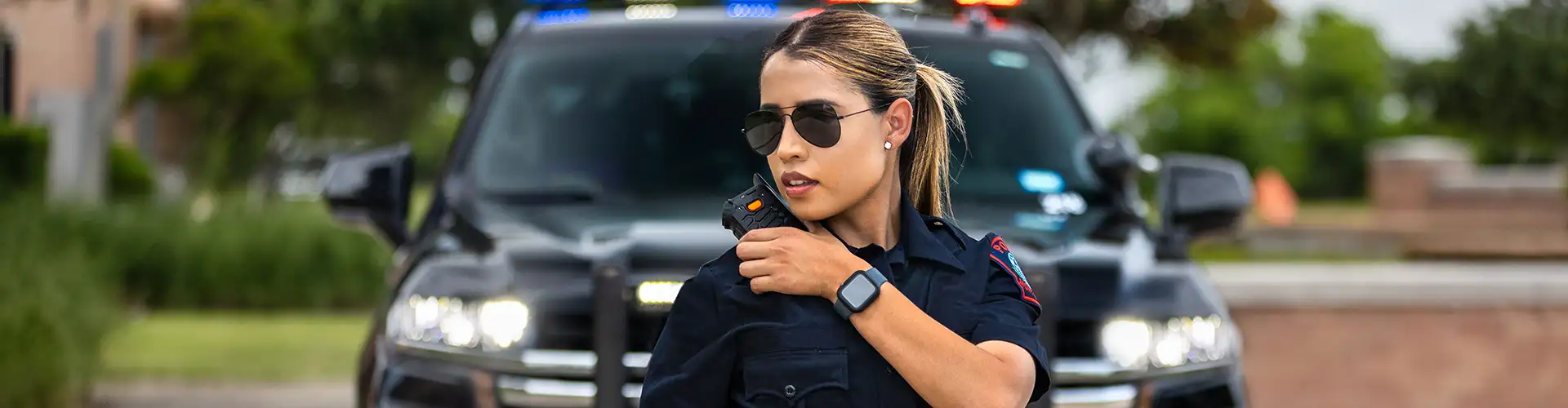
  • Emergency Services – Police, fire, and rescue personnel depend on dedicated radio channels to mobilize and communicate in a crisis. They need to use a repeater so they can go where they are needed without worrying about losing their radio signal.
  • Public Transport – Truck drivers often use mobile radios mounted in their vehicles to communicate with other drivers, dispatch, and receive traffic information. Two-way radio repeaters are necessary to keep this important communication going.
  • Large Warehouse – A large warehouse can use a repeater where signals may be disrupted due to obstacles in and around the building. Repeaters can be programmed to send instant alerts to managers, maintenance, and others working in a warehouse.

Benefits of a Radio Repeater

While two-way radios are an excellent resource, their range is limited. For example, if you have a 40,000-acre ranch, you’ll need a repeater to reach from end to end.

In addition to extending your coverage range, a radio repeater totes several additional benefits:

  • Clear Coverage – With repeater radio systems, mobile radio signals are amplified and obstructions are decreased.
  • Enhance Signal – Even in areas where you have little or no signal, the repeater will strengthen the signal so you can communicate with a weak connection.
  • Instant Communication – Repeaters give you instant communication, allowing for faster responses, so you can enjoy continuous service without the inconvenience of broken signals.
  • Inexpensive – The cost of repeaters is less compared to purchasing a whole new fleet of radios. This one addition makes better use of the radios you already have.

Radio Repeater Components

In order to receive a frequency from portable two-way radios and re-transmit them in real-time, a radio repeater uses innovative technology.

Although the results are impressive, the components are relatively simple.

  • Receiver – A radio receiver accepts the incoming signal. On a repeater, the receiver is very sensitive so it can pick up even a very weak transmission. It eliminates any distortion in the process and sends the message to the radio transmitter in real-time.
  • Transmitter – This separates the transmission from reception. The frequency of a repeater transmitter range lies between 500 kHz to 5 MHz. This separation point is called “offset” and it also prevents repeaters from interference.
  • Controller – The controller is the heart of the repeater that activates the transmitter and sends out the pre-recorded messages.
  • Antenna – The antenna is on top of the radio receiver. It is an ultra-powerful component that both transmits and receives signals.
  • Feed Line – Aluminum cables create a feed line on a repeater system. These cables have better quality when compared to regular coax, allowing signals to be retained even from weaker sources delivering great performance.

FAQs About Radio Repeaters

Can I link repeaters together? This is possible but gets complicated with radio frequencies and outputs. At this point, it’s best to call a professional to get the correct setup that delivers the range you need.

Do I need a repeater license? Yes. Typical repeater licenses at UHF require a frequency pair operating 5 MHz apart.

What’s the best location to mount a repeater? The repeater should be on a flat surface that is clear from interference. Choose a location that has plenty of clearance for ventilation and is away from other power cables, TVs, filing cabinets, etc. The antenna should be able to reach in a fully vertical position without obstruction.

How do digital repeaters differ from analog repeaters? The main difference is in how the messages are processed. In an analog repeater, the receiver voice is filtered and sent directly to the transmitter. In the digital repeater, the processor first converts to binary bits and then sent to the transmitter.

Are repeaters compatible with all types of two-way radios? Yes, repeaters can be used with all types of two-way radios that have a channel designed for use with a repeater.

Get More Coverage with a Repeater

A number of businesses have made the switch from mobile phones to digital two-way radio in recent years, and have reaped the benefits. You can enjoy better communication, increased technology, and better connectivity than cell phones.

Using a radio repeater may be the key your team needs for better communication anywhere you work. If your business needs a repeater, contact us today!

Types of Two-Way Radios

3 Types of Two-Way Radios for All Industries

Communication has never been easier than it is right now.

Whether you call, text, tweet, comment, or DM, connecting with others across the room or around the globe only takes a few seconds.

Two-way radios have been at the forefront of voice communication for nearly 100 years. Despite the ever-rising communication technology, this century-old style still reigns supreme.

What keeps two-way radios relevant and necessary? And why will they continue to dominate the communications market?

Get ready to dive into why all different types of two-way radios are still the best choice and how to decide which one is best for you.

3 Types of Two-Way Radios

There are three main types of two-way radios: portable two-way radios (aka Walkie Talkies), mobile radios, and desktop base station radios.

Approximately 90 percent of all two-way radio users are choosing portable radios. Although mobile and desktop stations still have specific industries where they are primarily used.

1. Portable Radios 

These types of two-way radios, otherwise known as walkie-talkies, are handheld two-way radios that can both transmit and receive voice communications. They are often found carried on a belt-loop of professional workers on the job. These radios can either be analog or digital two-way radios.

Today’s professional two-way handheld radios are incredibly versatile, providing users with a variety of options for improving communications on the job.

Portable two-way radios can be used in almost any job setting and are ideal for the following industries:

  • Construction
  • Facility Management
  • Golf Courses
  • Healthcare
  • Hotels & Resorts
  • Manufacturing
  • Religious Institutions
  • Schools

2. Mobile Radios 

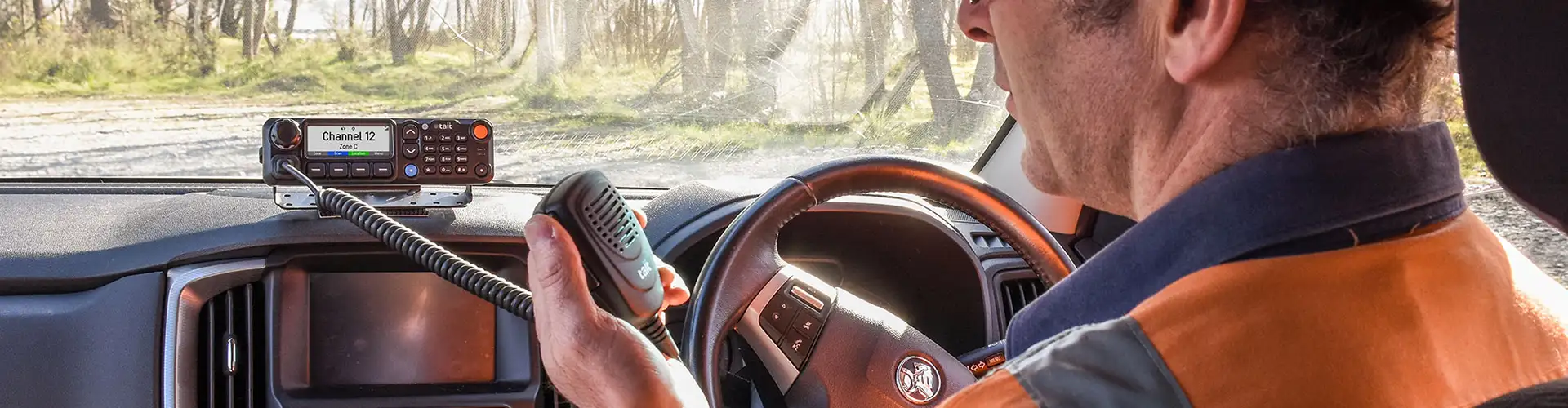
Mobile two-way radios are designed to be installed inside a vehicle and connected to an external antenna mounted outside the automobile. All mobile two-way radios are transceivers, meaning they can both transmit and receive and are designed to cover long distances.

They are perfect for employees that are driving most of the day and need to stay in touch with the home base as well as other employees who are driving most of the day.

These types of two-way radios are ideal for the following industries:

  • K12 Education
  • Colleges and Universities
  • Manufacturing
  • Security
  • Hotels

3. Desktop Base Station Radios

A desktop base station radio rests on top of a desk and plugs into the wall for power. These types of two-way radios are extremely reliable but also larger and heavier than portable or mobile radio options.

Desktop base stations are ideal for receptionists, admin, and others who run the show from a desk most of the day.

These types of two-way radios are ideal for the following industries:

  • K-12 School front office admin
  • Colleges and Universities
  • Manufacturing
  • Security Facilities
  • Hotels

Types of Radio Services

As two-way radios began to grow in popularity in the 1980s and 1990s, defining frequencies became essential to keeping radio use organized and clear.

Your radio service is essentially the frequency on which your radio sends and receives transmissions.

Think of radio services like a highway. Some frequencies are public and open to anyone, others are private roads. Some require special licensing to use (like a toll road) others are available for anyone to use (or drive on).

In addition to the frequency (or highway), radio services also include one- and two-way voice services, data services, and remote-control transmissions that operate the equipment.

For more information about radio frequencies, check out out article about uhf vs vhf radio frequencies.

Here are some of the most popular types of services:

1. CB Radio

Citizens Band (CB) radio is part of what the Federal Communication Commission (FCC) calls “personal radio services.” These are low-power, short-range radios for personal communication that do not require a license to use.

While CB radios can be used for commercial use, they’re most commonly used for private individuals in motor vehicles, homes, offices, and other locations where wireless telephone service is unavailable.

CB radios have 40 channels and are open to anyone. That means it’s up to you to find a channel that’s available, and it’s possible for anyone to hear your communications by plugging into the same public channel.

2. Multi-Use Radio Service (MURS)

This is a short-range service for personal use. There are only 5 MURS radio channels

This is best used for short-distance, two-way communications. For example, employees inside of a Walmart or Sam’s Club may use MURS radio when communicating within the building. It may also be used by hunters, farmers, or security personnel.

3. FRS Radio

The Family Radio Service (FRS) is a private, two-way, short-distance voice and data communications service.

There are 22 channels available, all of which are open to the public. FRS is great for facilitating family and group activities using small hand-held radios that are similar to walkie-talkies.

Most commonly, FRS is used by hunters, hikers, bikers, and families enjoying the outdoors together.

4. Low Power Radio Service (LPRS) Radio

Low Power Radio Service (LPRS) is a private, one-way communication service that can be operated anywhere in the world.

Typically, it is used for auditory assistance to people with disabilities, people who require language translation, and certain individuals in educational settings.

5. GMRS

The General Mobile Radio Service (GMRS) is similar to an FRS radio but has designated channels that require an FCC license to operate.

The channels available to GMRS radios users are more powerful, have a further range, and can be extended if necessary.

Generally, a GMRS service is used by large companies operating over a larger area, or those who want more flexibility and power offered by a GMRS channel.

The Main Components of Two-Way Radios

Two-way radios are very simple, which is why they are so reliable.

Instead of a complicated touch screen, motherboard, widgets, and apps, there are only five main components to any two-way radio.

  • Antenna – This is how your radio receives the communication. It’s important to keep the antenna in good condition and avoid bending or crimping it.
  • Microphone & Speaker – This is where you will hear others, and be heard as you communicate with your team. The microphone and speaker can be connected to a headset for hands-free communication.
  • Display Screen – Some radios have a display screen that clearly shows battery life, radio channels, and sometimes even text messages or work orders from other radios on your network.
  • Buttons – There are two important buttons found on your two-way radio systems: the power and push-to-talk buttons. The power button is simply what turns your device on and off while the push-to-talk button is what allows others to hear you speak. Some devices may have a keypad for texting, others may not.
  • Battery – Each two-way radio comes with a powerful battery that is designed to last between 18-24 hours.

Two-Way Radio Accessories

When you invest in a two-way radio system, it may be worth considering what accessories will make your system work best. You want to ensure that your radio systems are running at peak efficiency, the users are comfortable, and the radios themselves are protected.

The most popular accessories we recommend cover all these bases.

  • Chargers – Every headset needs a charger and a battery. If you have a powerful battery, and a reliable charger, this means a longer-lasting radio. Single chargers or multi-chargers are also great for storing your devices and keeping them organized.
  • Headsets & Earpieces – If your team is using the radio frequently throughout the way, a headset might be the best way to prevent fatigue and allow them to concentrate on their job while working.
  • Radio Cases – Radios are more durable than any smartphone, but a case adds an extra layer of protection and convenience. The case can be attached to a belt and protect the phone against scratching, dropping, or damage.
  • Repeaters – A radio repeater is used to extend the range of your radios. It is designed to act as a waystation to both receive and transmit radio signals across long distances. Similar to a WiFi extender, a radio repeater extends the range of communications for your existing two-way radios.

FAQs About Two-Way Radios

What distance do two-way radios work over? It depends on the quality of the equipment you are using and the atmosphere you are in. For example, the International Space Station uses two-way radios that can communicate with Earth. However, they are extremely sophisticated and there’s little to no obstruction in space. A mid-range two-way radio technology used inside of a building may only work for about 100 yards. Repeaters can be used to extend signals, and a local expert can get you the setup you need in your area.

Do I need a two-way radio license? It depends on what type of system you need. For a small operation with just a few radios in a more remote area, you likely can use unlicensed radios. If you require a larger area of coverage, secure communications, multiple teams on different channels, or are operating in the middle of a city, then you will need to buy licensed equipment.

Which is better: FRS or GMRS? GMRS is a higher quality service because they use designated channels that aren’t available to FRS radios. GMRS radios can also be modified to have a stronger, farther-ranging signal, while FRS cannot be modified.

Can two-way radios be tracked? Technically no, two-way radios are difficult to trace. However, if you are using a public channel, anyone who tunes to that same channel can hear what is going on. You may not be traceable via GPS (although some have that capability), but your communications are not private unless you’re using a private, licensed, channel.

Make Your Communication Easy

Many people ask us what’s the difference between two-way radios vs cell phones.

The efficient and instant communication you get with different types of two-way radios cannot be replicated with a smartphone.

Despite attempts from all major manufacturers, two-way radios can’t be beaten.

Today, the majority of two-way radio users opt for the handheld style because of its accessibility, durability, simplicity, and effectiveness when communication may quite literally be a matter of life and death.

If your business needs to stay connected on the job with a clear and reliable signal anywhere you work, say goodbye to expensive smartphones and welcome to the world of two-way radios from VEI Communications.

Two-Way Radios vs Cell Phones

Two-Way Radios vs. Cell Phones: 13 Benefits of Two-Way Radios for Your Business

Do People Still Use Two-Way Radios?

Really?

Yes, really.

Even in the world of smartphones in every pocket, two-way radios are still the preferred method of communication by professionals in business, industrial, and government industries.

Cell phones are great for consumers and the common person, on an everyday basis. When it comes to two-way radios vs. cell phones, there’s a reason two-way radios are used by a vast majority of people inside the business and industrial professions.

In most cases, the two technologies are not actually direct competitors at all.

We will explore the advantages and disadvantages of each and dive into why two-way radio communication just may be the smarter, more cost-effective choice for your business or organization.

VEI Communications is here to help you figure out what your business or organization needs and find a custom solution.

Let’s get started.

Understanding the Differences Between Two-Way Radios & Cell Phones

The convenience of the typical cell phone can’t be argued against. It’s basically a computer in your hand. It can send a photo, text a message, edit a document, and dial a number to speak to anyone, anytime, anywhere in the world.

The primary difference between two way radios vs. cell phones is who and how many individuals you can communicate with at once.

Of course, we understand there is such a thing as a conference call or group text, but no group communication on a cell phone is more efficient than a two-way radio.

There is an old saying about using the right tool for the right job.

In the case of two-way radios vs. cell phones, this is especially true. Each has its place, to be sure.

Cell PhonesTwo Way RadiosNo limited range – call anyone from anywhereDoesn’t work long distanceMonthly fees and data plans can be expensiveUser-friendly, simple to useSubject to service provided by an active cell tower nearby or your charges increase significantly for roamingCompletely durable and weather-resistantSometimes can be difficult to use while wearing gloves; not always a user-friendly interfaceLess expensive than cell phonesNo license necessary; anyone can own one and use oneNo monthly service or roaming charges applyHigh roaming charges when away from the area of serviceMay require an FCC licenseFragile, breakable, and subject to water damageWorks great in remote or rural locationsMay not work in rural or remote locationsMultiple calls are simple by pressing the PTT (press to talk) button for a group conversationInstant connection; no wait time or busy signal ever

So, for people or organizations in education, manufacturing, healthcare, government, or public safety, just for ease, two-way radio communication seems like the best option. But when you begin to explore the many benefits of two-way radios vs. cell phones, you’ll see there’s simply no contest.

13 Benefits of Two-Way Radios for Commercial & Industrial Use

When your focus is getting the job done, you don’t have time to download the app or wait for the other person to answer the phone. You need instant, easy, and clear communication.

This is why two-way radio systems have many benefits over a cell phone.

Professional two-way radio communication provides an effective and reliable solution customized for each business.

From longer battery life to lower cost of ownership, here are 13 benefits to consider when deciding between cell phones or two-way radios.

1. Longer Battery Life

Two-way radios carry a significantly longer battery life than cell phones and have portable batteries that you can pop in to ensure communication in emergency power outages or extreme circumstances.

2. Better Network Security

You don’t have to worry about a breach in security, a phone being bugged, or a breakdown in network coverage. Two-way radios are the best way of safe, secure communication.

3. Improved Call Quality & Coverage

Oftentimes, you don’t get reliable cell service when you’re working on a construction site, in remote areas, or on the road. With two-way radios, you have clear communication and quality sound anywhere, anytime.

4. Leads to Reduced Down Time

No more waiting for your phone to be fixed, trying to get service, getting lost on social media apps, or blaming a lost call on bad timing. Now you can focus on the job at hand instead of your cell phone problems.

5. Noise-Canceling Technology

With advanced noise-canceling technology, background noise is eliminated, giving you clear communication no matter where you are.

6. Superior Durability

You can drop, drag, dunk or spill a two-way radio and they are virtually indestructible.

7. More Practical User Interface

It’s not always realistic to use a touch screen when you’re on the job. Two-way radios are simplistic and easy for anyone to use.

8. Enhanced Communication Capabilities

Now you can communicate with the entire team instantly because you don’t have to wait for a connection. Just push, talk, done.

9. Better Suited for Emergency Situations

You don’t have to worry about getting a busy signal, someone not picking up their phone, or losing service when you are in an emergency situation.

10. Cost Savings

No monthly bill. Need we say more?

11. Independent Network

You are no longer reliant upon a cell phone tower or your provider’s network of coverage. Two-way radios function on a completely separate system. This also means they still work during network outages.

12. Advanced Notifications

Yes, you can still use your two-way radio to receive alarms, work tickets, and monitor lone workers on job sites.

13. Less Distracted Driving

All interstate truck and bus drivers are banned by federal law from any handheld cell phone use while behind the wheel. This means it’s nearly impossible to get in touch with drivers.

However, by using two-way radios, drivers don’t have to hold, dial, or reach for a mobile phone in their vehicle. FleetTalk services through VEI are available for this exact purpose. Now you can communicate with your entire fleet instantly, clearly, and without violating any federal cell phone laws.

FAQs About Two-Way Radios & Cell Phones

There is a clear difference between two-way radios and cell phones. Both are portable means of communication. The similarities end there.

The how and why they are used in certain situations is the key difference.

Can you use your phone as a two-way radio? While there are some apps that may allow you to use your cell phone in a way that mimics a walkie-talkie or two-way radio, they almost always require either Wi-Fi or a network connection. Without either of those two, the simple answer is no.

Are two-way radios actually secure? Yes. Commercial two-way radios are widely used because they have a dedicated frequency and use encrypted communication, making them secure lines of communication.

How do I get an FCC License to use two-way radios? With the help of VEI Communications, obtaining your FCC License has never been easier. Contact us for more information or visit our FCC License page to get started.